Ear Piercing in Honolulu: What to Expect at HPC
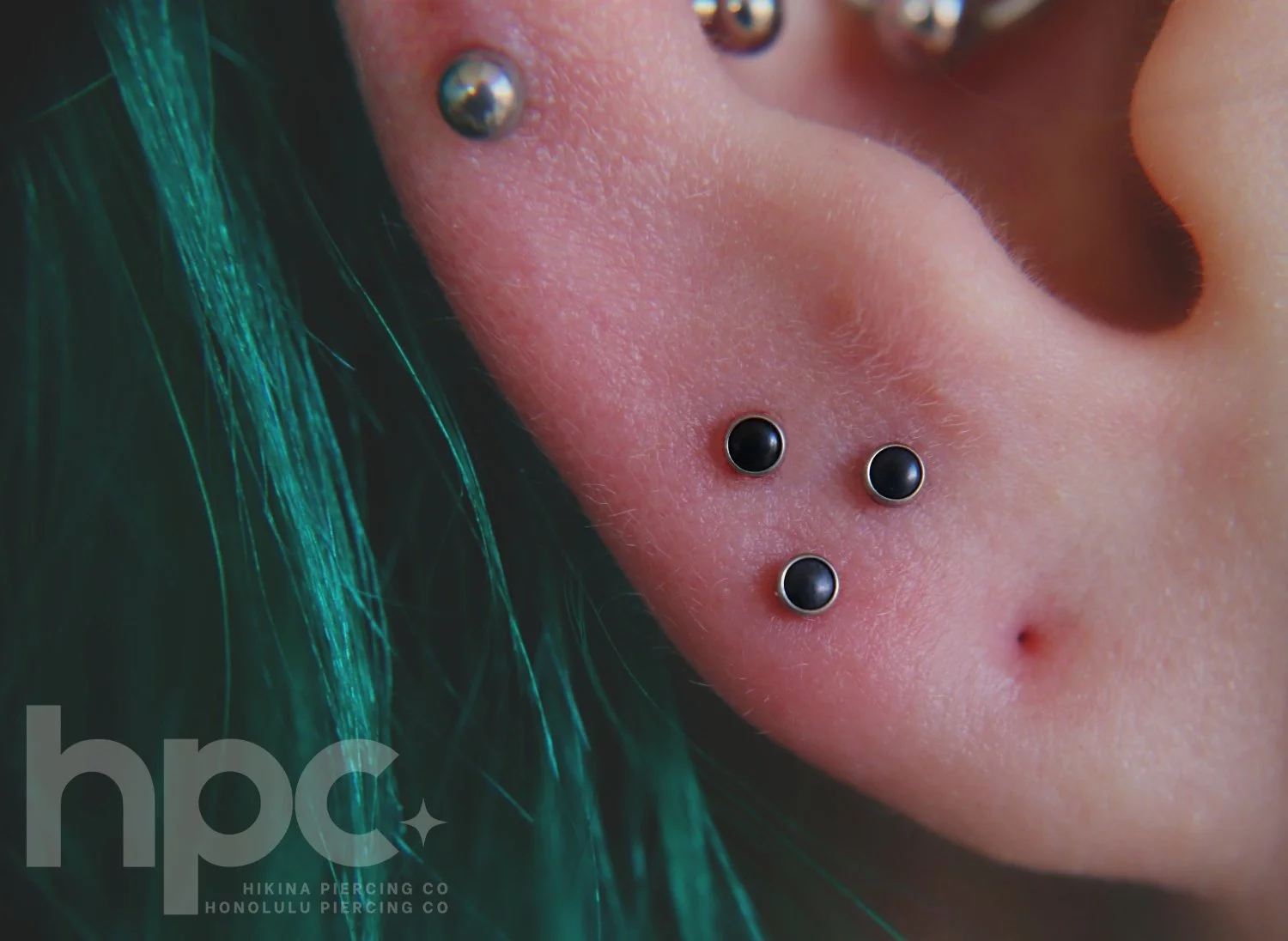
Ear piercings sound pretty straightforward — until you've had one heal wrong. A funky angle that never looked quite right. Subpar jewelry that kept the tissue swollen for months. A piercer who didn't take your anatomy into account before marking the spot. Any one of those things can turn a simple piercing into a frustrating, drawn-out experience. These are the details that a thorough consultation at HPC exists to prevent.
Every ear piercing appointment at HPC in Honolulu starts with a one-on-one between you and your piercer. Your anatomy, your jewelry options, your lifestyle, your aftercare — all of it gets discussed before anything is marked or prepared. So that by the time you walk out, you're fully ready to take on your newest addition.
Why the Anatomy Check Comes Before Everything Else
Not every ear is suited for every placement. Industrial piercings require a prominent outer helix to support the bar. Cartilage thickness and shape vary dramatically from person to person — what settles in three months on one ear can take twice as long on another. Even a traditional lobe piercing has nuances: tissue thickness, the natural drop of the lobe, how the ear sits when it moves.
Your piercer looks at your ear before they look at your request. That's the order of operations at HPC, and it's why placements here heal the way they're supposed to. See what to bring and what to expect before your appointment.
Lobe, Helix, Cartilage — Real Talk on Healing
Lobe piercings are the most forgiving. With proper jewelry and consistent aftercare, most settle within two to four months. Cartilage is a different conversation. Helix, tragus, daith, conch, rook, industrial — all of these heal slower because cartilage has less blood supply, and healing requires blood flow. You're typically looking at six months to a year for full healing, sometimes longer depending on your anatomy and lifestyle.
On Oʻahu, that cartilage conversation has a layer most aftercare pamphlets don't cover. The humidity, the salt air, the ocean access — all of it affects healing tissue in ways the mainland doesn't have to think about. Your piercer will give you a realistic timeline based on your specific ear, your lifestyle, and the Hawaiʻi environment. Not a number they made up to make you feel better.
The Jewelry Going In Matters as Much as the Aftercare
HPC pierces exclusively with implant-grade materials: titanium (ASTM F-136), niobium, steel, or solid 14K or 18K gold. High-polish, internally threaded or threadless, sized correctly for your anatomy and the placement. Starter jewelry that's too long, too short, or made from the wrong alloy is one of the most common reasons cartilage piercings develop irritation bumps — and it's entirely preventable when the studio doesn't cut corners on materials.
If you're ready to start with something more elevated — a specific stone, a particular style — the team will walk you through in-studio options including pieces from BVLA not available elsewhere on Oʻahu. Browse the jewelry selection before you come in.
What Your Appointment Actually Looks Like
You come in, you meet your piercer, you talk. Anatomy, placement, jewelry, aftercare — the conversation covers all of it before anything else happens. The piercing itself is fast. That first conversation is where your healing outcome gets decided.
After you leave, HPC offers complimentary follow-up appointments to check on your healing throughout the process — not a paid add-on, just part of how the studio works. Get a head start on aftercare guidelines so you know exactly what the next few months look like.
Book Your Ear Piercing in Honolulu
HPC is on Waialae Avenue in Kaimukī, open daily 11 AM to 7 PM. The Kaimuki Municipal Lot at 1150 12th Ave is directly across the street. Walk-ins are welcome for consultations anytime.
Ready to go? Your ears deserve the real thing.
Frequently Asked Questions About Ear Piercing in Honolulu
-
Lobe piercings typically settle within two to four months with proper aftercare. Cartilage piercings — helix, tragus, daith, conch, industrial — take six months to a year, sometimes longer. On Oʻahu, humidity, salt air, and ocean access are real variables that affect cartilage healing in ways a generic pamphlet won't mention. Your piercer gives you a real estimate based on your specific anatomy and lifestyle.
-
Yes — briefly. A lobe piercing is a quick pinch. Cartilage has a sharper sensation and sometimes a dull ache for a day or two after. Your piercer works quickly and precisely, which makes a meaningful difference in the moment. Most clients are surprised by how fast it's over.
-
Often yes. Your piercer will assess what makes sense to combine based on your anatomy and placement choices. Healing multiple cartilage piercings simultaneously on the same ear can extend timelines — your piercer will tell you honestly what's realistic for your situation rather than just saying yes to everything.
-
No submersion for a minimum of six weeks — ocean, pools, hot tubs, all of it. On Oʻahu that's a real lifestyle adjustment, and your piercer will talk through what that window actually looks like for you and what to do if the piercing gets wet anyway. The answer isn't panic. It's clean water and dry thoroughly.
-
That's exactly what the anatomy check is for. If a placement won't heal well for your specific ear — and some won't — your piercer will tell you directly and suggest alternatives that will actually work long-term. HPC won't pierce something that isn't going to heal right.